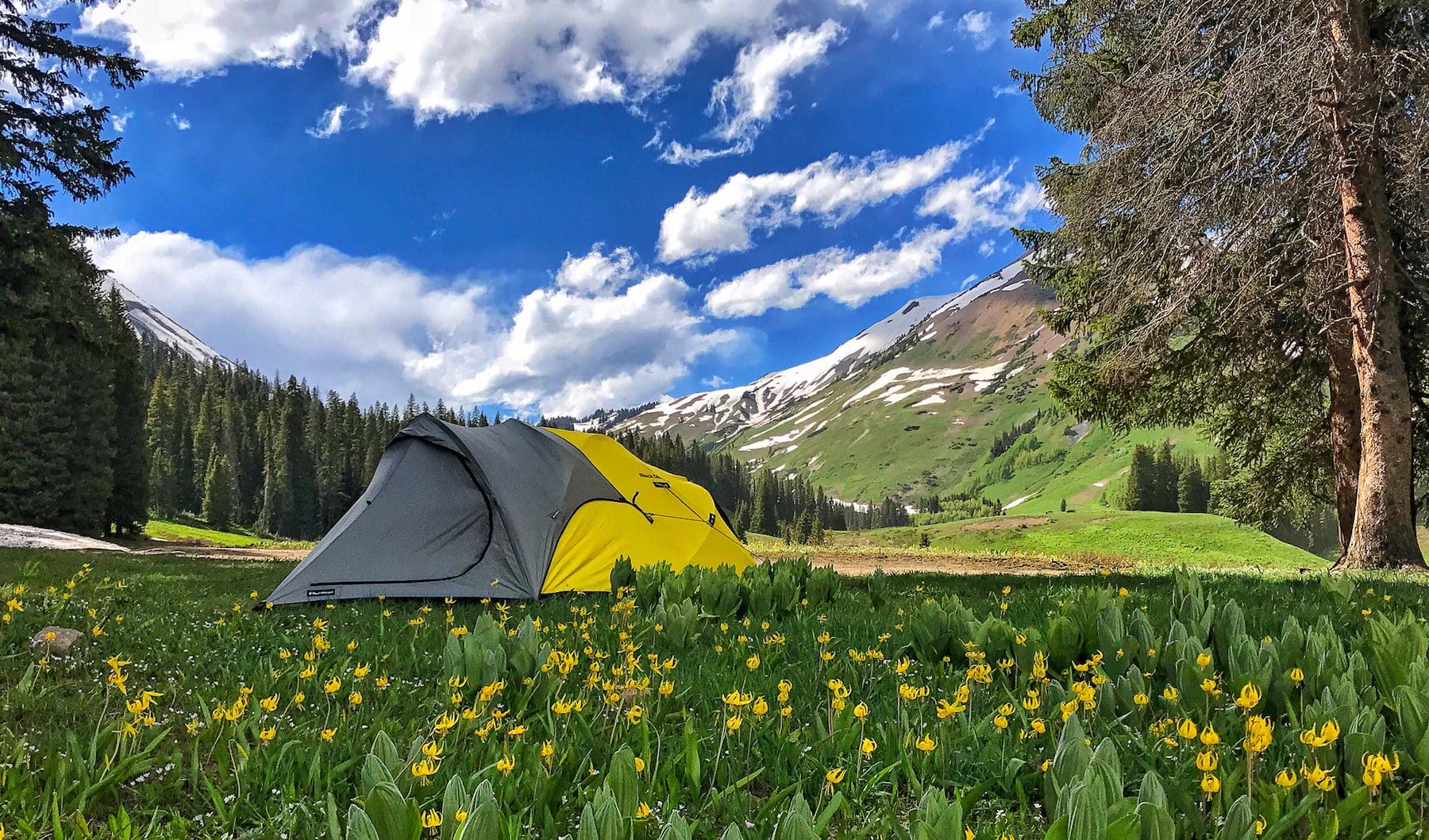
Wake up in the cool, pine scented air tinged with the smoky remnants of your campfire. There's nothing like unplugging and escaping the noise and chaos of modern life by camping in the Crested Butte backcountry.
Options range from off-the-grid nobody around camping to modern established sites with convenient amenities. All sites around Crested Butte are now designated or established so we recommend arriving early if possible.
Heads up! Dispersed camping is not permitted near Crested Butte.
Pay-for sites with fire rings, picnic tables, trash service, and bathrooms. Fees run about $14 to $24 per night.
These fill fast in summer, so reserve ahead at Recreation.gov where possible. Closest options to town: Gothic up the East River valley and Oh Be Joyful on the Slate River (25 ft RV limit, rough access road).
Lake Irwin on Kebler Pass is closed for a full rebuild: no camping until June 2028, and the whole area including the access road is gated shut for all of 2027. It returns with more sites and triple the parking, which anyone who has circled that lot on a July Saturday will appreciate.
Most have a host on site, drinking water, and vault restrooms. Many of the Taylor Canyon and Blue Mesa campgrounds take larger rigs.
Camp only at a marked site: a post with a site number, a metal fire ring, and a parking spot. First come, first served, 14-day maximum, two vehicles per site.
No site saving. It is illegal to leave property unattended for more than 24 hours. Fires are allowed only in the installed USFS rings.
Most designated valley sites are free. The exception is Gothic Road, where the Forest Service charges $18 per night ($9 per additional vehicle), payable at the kiosk near the sites.
Slate River, Washington Gulch, Brush Creek, Cement Creek, Gothic, Kebler Pass, and Lake Irwin are all designated campsite areas now. Around 208 sites fill from Friday through Sunday at the height of summer. If everything is full, do not make your own site: travel mid-week, arrive Thursday, head farther out where dispersed is allowed, reserve an established campground, or book a room.
As of 2024 there are no dispersed sites near Crested Butte. The closest are on the far side of Kebler Pass or south of town in the Spring Creek area, reached via Almont.
Camp on durable surfaces where others have camped before, at least 100 feet from any water source. Limits are 14 days at a time and 28 days total in any 60-day period.
No services of any kind: pack out all trash and human waste, store food in a bear canister or hang a bear bag, and put fires fully out with water.
Filter by type, access, or what you need. Tap any pin or zone for detail.
Vehicles 35 ft or longer should stop at these points on each valley. Beyond them, roads narrow, turn-arounds disappear, and tow rigs get stuck.
Crested Butte sits in a sea of wildflowers, ringed by wilderness and full of wildlife, and almost everyone who camps here treats it that way. Unfortunately, every summer a few pollute our campgrounds with trash meant for a dumpster:
A few more walk away from fires still smoldering, the real danger after a dry winter. It takes very little to ensure these beautiful spaces remain open for everyone.
Every summer, the CBCC hauls out the abandoned gear, restores worn sites, and keeps these valleys open for the rest of us. Their work is why this place still looks the way it does.

It happens to everyone eventually. The fix is usually simpler than driving home: change when you come, or where you look.
Your odds improve, though sites can still fill on a busy weekend.
Paid and private, with showers, hookups, or a roof. When you just need it handled.
Eight cabins on 10 acres in Gunnison National Forest.
From hotel rooms to cozy inns to vacation rentals in place.
Round out the trip. Everything you need is in town or just down the road, including guided trips and shuttles in the services directory.
Reservations, fees, fire rules, and finding a spot in July.
Some established campgrounds (Oh Be Joyful, Lottis Creek, One Mile) are reservable on Recreation.gov, and weekends book out weeks ahead in peak summer. Lake Irwin is closed for reconstruction until June 2028, so it is off the books until then. The designated valley sites (Slate River, Washington Gulch, and the rest) are all first come, first serve, no reservations possible. If you want a guaranteed spot on a July or August weekend, reserve an established site ahead or have a backup plan.
Upper-valley sites like Gothic and Lost Lake usually open in mid-June once the snow melts and close in early October. Lake Irwin is the exception: closed for a full rebuild, with the whole area gated shut for all of 2027, reopening June 2028. Lower sites near Gunnison and Blue Mesa open in late May and stay open into mid-October. The designated valleys are accessible whenever the access roads are clear, roughly late May through late October.
Established campgrounds run about $14 to $24 per night, paid on Recreation.gov or to the on-site host. Designated valley sites are free, with one exception: Gothic Road sites charge $18 per night ($9 per additional vehicle), payable at the kiosk. Paid private options like Three Rivers Resort start around $45, and full-hookup RV parks like Gunnison KOA run $40 to $65.
To some sites, yes. Several established campgrounds take large rigs, and a number of designated sites are marked large-RV friendly. But many designated sites are 4x4-only with tight, rough access. Use the access filters on the map above to see which sites fit your setup before you commit to a valley.
Established USFS campgrounds have vault toilets but usually no potable water, bring your own. Designated valleys have a handful of vault toilets plus seasonal porta potties (toggle "Toilets" on the map to see both) but no water and no services. Round markers are porta potties, and a dashed edge means the placement is seasonal. For showers, hookups, and laundry, head to Gunnison KOA or Three Rivers Resort.
Yes at almost all sites, leashed. Keep food stored in hard-sided vehicles, give moose and other wildlife wide room, and never leave a dog tied up unattended. The free Mt Crested Butte walk-in tent campground is the main exception, no dogs there.
Common on July and August weekends. Arrive Thursday to beat the rush, shift to mid-week, or drive 25 to 45 minutes out to Taylor Park, Curecanti, or the Gunnison side where there are far more sites. Paid options (KOA, Three Rivers, cabins) are the reliable fallback. See the backups section above for the full list.
Dispersed camping is no longer allowed in the seven drainages closest to town: Slate River, Washington Gulch, Brush Creek, Cement Creek, Gothic, Kebler Pass, and Lake Irwin. In those areas camping is limited to numbered designated sites and developed campgrounds under Forest Order GMUG-2022-10, in effect since 2022. Dispersed camping is still open across much of the rest of the forest, including up Taylor Canyon and Spring Creek above Almont and the descent west of Kebler Pass toward Paonia. Rules change, so confirm current closures on the Gunnison National Forest site before you head out.
When there are no fire restrictions, yes, in established metal rings only. Fire restrictions and full bans are common in late summer and can change overnight. Check the current fire status at the top of this page before you plan on a fire, and always put it dead out: drown, stir, drown again until it is cold to the touch.
Trail reports, events, and insider tips.